
Foodborne Pathogen Testing
& Toxin Analysis
Identify dangerous microorganisms and toxin-forming bacteria before they reach the consumer. In turn, AGT delivers comprehensive foodborne pathogen testing for product safety and FDA / USDA compliance.
Control of Foodborne Pathogens
Effective management of foodborne pathogens through accredited foodborne pathogen testing is the cornerstone of any modern food safety program. Consequently, AGT Food Labs coordinates a full spectrum of foodborne pathogen testing covering the major bacterial pathogens and priority screening targets — helping you identify contamination risks, prevent outbreaks, and meet FDA, USDA, and FSIS standards while avoiding costly FDA import detentions.
Accreditation scope: Salmonella testing and Listeria testing, along with E. coli O157:H7, STEC, Staphylococcus aureus, and Bacillus cereus, are accredited to ISO/IEC 17025:2017 by PJLA and under the FDA LAAF program (Cert L26-535, Houston). Campylobacter and Clostridium spp. are ISO/IEC 17025:2017 accredited (not currently under FDA LAAF). In addition, Vibrio, Shigella, Clostridium botulinum, and foodborne viruses (Norovirus, Hepatitis A) are offered as non-accredited validated screens or through our accredited partner-laboratory network.
Common Foodborne Pathogens & Toxins
High-precision detection of leading recall causes — including Salmonella detection and Listeria monocytogenes testing — under FSIS, FDA, and international safety standards. Moreover, comprehensive foodborne pathogen testing spans the priority bacterial, toxin-forming, and viral targets.
STEC (Shiga-toxin E. coli)
As a USDA zero-tolerance adulterant in raw beef, Shiga toxin-producing Escherichia coli (STEC) demands validated detection. Specifically, we run PCR detection of stx1 / stx2 plus the seven serogroups (O157, O26, O45, O103, O111, O121, O145).
- SOP 024
- AOAC-RI PTM #121203
- PCR Molecular Detection
Sample Size: 375g (N60) or 25g | LOD: Negative per sample | Shipping: Refrigerated (2–8°C)
Industry Application:Primarily, N60 excision sampling is standard for beef trim and ground beef compliance. Additionally, it is critical for agricultural water testing under FSMA for leafy greens and sprouts.

Staphylococcus aureus
Staphylococcus aureus is a hygiene indicator common in hand-assembled and heat-treated foods, and its enterotoxins are heat-stable. Therefore, our accredited service enumerates S. aureus to verify sanitation and process control, so heat-treated finished products can be cleared with confidence.
- AOAC 2003.07 / 2003.08 / 2003.11
- Petrifilm™ / Baird-Parker Count
Sample Size: 50g | LOD: < 10 CFU/g | Shipping: Refrigerated (2–8°C)
Industry Application:Chiefly a target for Ready-to-Eat (RTE) foods involving manual assembly — namely bakery fillings, cream pastries, dairy products, and hand-contact-surface monitoring.
Direct enterotoxin immunoassay (ELISA) is available as a non-accredited validated screen, outside the ISO/IEC 17025:2017 scope.
Bacillus cereus
Notably, Bacillus cereus forms heat-resistant endospores that survive cooking and germinate in starchy foods held at improper temperatures. As a result, our accredited service enumerates presumptive B. cereus for rice, pasta, dried ingredients, and powdered formulations.
- SOP 031
- FDA BAM Chapter 14
- MYP Agar Plate Count
Sample Size: 50g | LOD: < 10 CFU/g | Shipping: Refrigerated or Ambient
Industry Application:In particular, it is critical for starchy foods (rice, pasta, potatoes), dried milk powders, spices, and verification of cooling protocols in catering operations.
Clostridium spp.
Anaerobic foodborne pathogen testing for Clostridium perfringens is essential for vacuum-packed and reduced-oxygen-packaged (ROP) products. As a result, detection in oxygen-deprived environments protects large-format and slow-cooled foods.
- SOP 034
- FDA BAM Chapter 16
- Anaerobic Plate Count
Sample Size: 50g | LOD: < 10 CFU/g | Shipping: Refrigerated (2–8°C)
Industry Application:Especially vital for meat processors handling large roasts, stews, and gravies, as well as sous-vide and ROP foods.
Clostridium spp. (incl. C. perfringens) is ISO/IEC 17025:2017 accredited (not under FDA LAAF); C. botulinum confirmation for low-acid canned foods is offered as a non-accredited validated screen.
Campylobacter spp.
The leading bacterial cause of gastroenteritis worldwide, Campylobacter jejuni is also a key FSIS performance standard for poultry. For this reason, microaerophilic detection requires specialized handling.
- SOP 042
- AOAC-RI PTM #031209
- PCR Molecular
Sample Size: 25g or rinse fluid | LOD: Negative/25g | Shipping: Refrigerated (do not freeze)
Industry Application:A key FSIS performance standard for poultry processing (broilers, turkeys); in addition, it covers compliance testing for raw milk plus rinse-water and carcass-swab monitoring.
ISO/IEC 17025:2017 accredited (not currently under the FDA LAAF program).
Vibrio spp.
Vibrio parahaemolyticus and V. vulnificus are halophilic marine pathogens responsible for severe shellfish-borne illness. Accordingly, we test raw oysters, clams, shrimp, and aquaculture exports.
- FDA BAM Chapter 9
- Culture / PCR
Sample Size: 50g | LOD: Negative/25g | Shipping: Refrigerated (2–8°C, do not freeze)
Industry Application:Specifically, it is critical for shellfish harvesters (oysters, clams), shrimp processors, and aquaculture export certification.
Offered as a non-accredited validated screen (outside the current PJLA ISO/IEC 17025:2017 scope).
Shigella spp.
Shigella transmits via the fecal-oral route and is a primary outbreak target in food service. Therefore, rapid PCR detection identifies contamination from infected handlers, contaminated produce, or agricultural irrigation water.
- FDA BAM Chapter 6
- Culture / PCR
Sample Size: 25g | LOD: Negative/25g | Shipping: Refrigerated (2–8°C)
Industry Application:Frequently a target in outbreak investigations; likewise, it supports routine screening for high-risk manual-assembly foods and testing of imported produce and agricultural water.
Offered as a non-accredited validated screen (outside the current PJLA ISO/IEC 17025:2017 scope).
Industries at Risk for Foodborne Pathogens
Notably, we provide targeted foodborne pathogen testing for high-risk commodity groups, with protocols matched to each vertical.
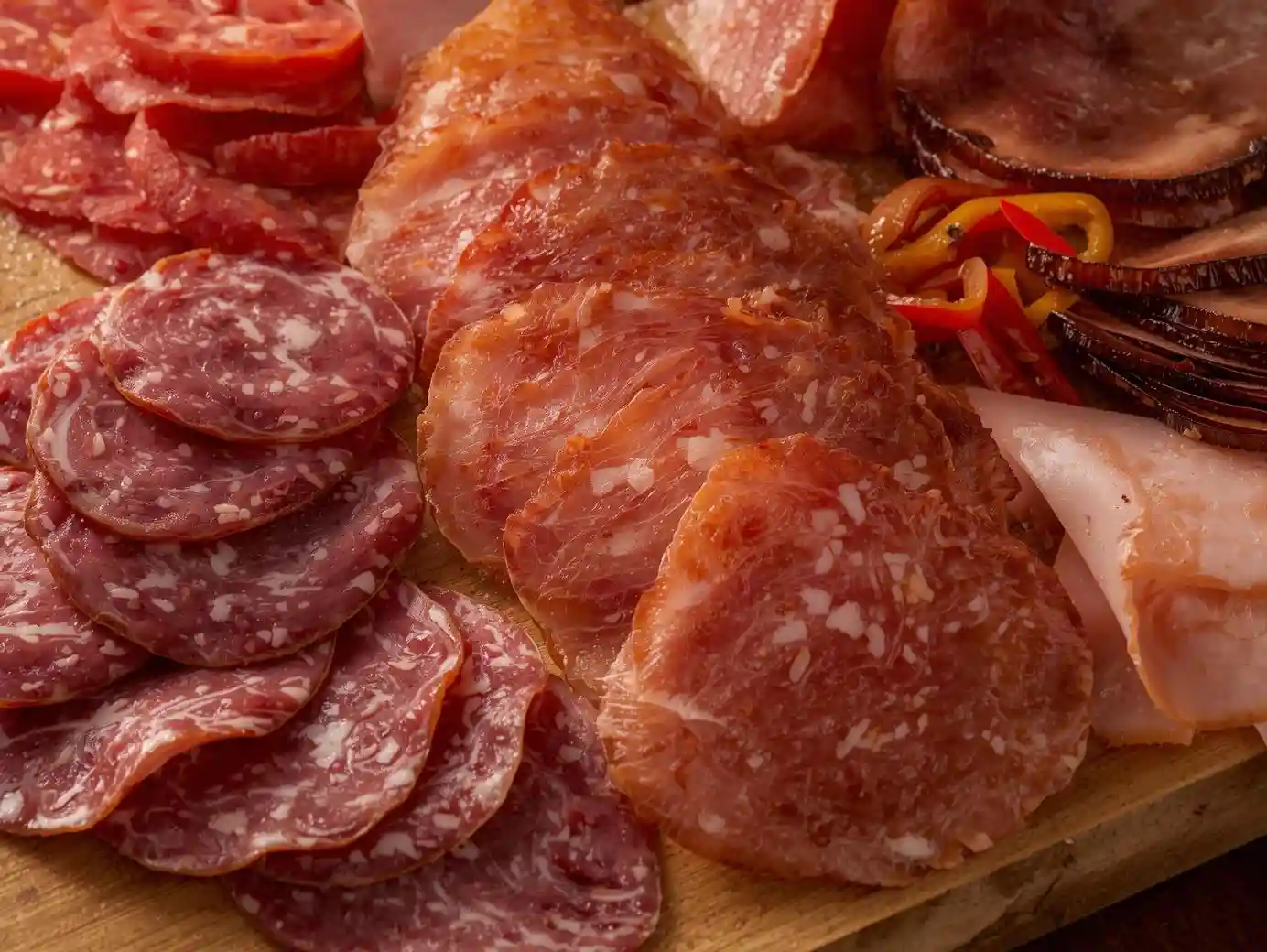
Beef & Poultry

Seafood & Shellfish

Fresh Produce

Dairy & Cheese

Ready-to-Eat (RTE)

Spices & Dry Goods
Why Choose AGT Food Labs?
Above all, we deliver single-point coordination, rapid turnaround, and expert support across every foodborne pathogen testing program we manage.
FDA LAAF-accredited for Salmonella, Listeria, E. coli O157:H7, STEC, S. aureus and B. cereus, and ISO/IEC 17025:2017 accredited by PJLA for Campylobacter and Clostridium spp. Specialized targets are offered as validated non-accredited screens. As a result, you receive legally defensible results.
PCR-based screening typically returns results in 24–48 hours; meanwhile, cultural confirmation adds 3–5 days for presumptive positives.
Furthermore, you gain direct access to technical managers for result interpretation, environmental monitoring plans, and corrective-action guidance.
Common Questions About Pathogen Testing
What are the "Big 4" foodborne pathogens?
How do you test for toxin-forming bacteria in food?
What is STEC and why is it a zero-tolerance adulterant?
How long does foodborne pathogen testing take?
How much sample is required for pathogen testing?
Prevent Foodborne Illness & Recalls
Verify your products are pathogen-free with our ISO/IEC 17025:2017 accredited, FDA LAAF-recognized pathogen testing using PCR and culture screening methods.
Request a Pathogen Quote