
01. The genus Listeria: a brief refresher
Listeria is a genus of Gram-positive, non-spore-forming, facultatively anaerobic, psychrotrophic rods. Six species are routinely encountered in food and environmental samples: L. monocytogenes, L. innocua, L. seeligeri, L. welshimeri, L. ivanovii, and L. grayi. Only L. monocytogenes is consistently pathogenic in humans. L. ivanovii is a known ruminant pathogen with rare human implications; the others are non-pathogenic but ecologically informative.
When a specification refers to “Listeria spp.,” it means any organism in the genus, pathogenic or not. When it specifies “L. monocytogenes,” it means that species alone, confirmed by characteristics that differentiate it from its non-pathogenic relatives.
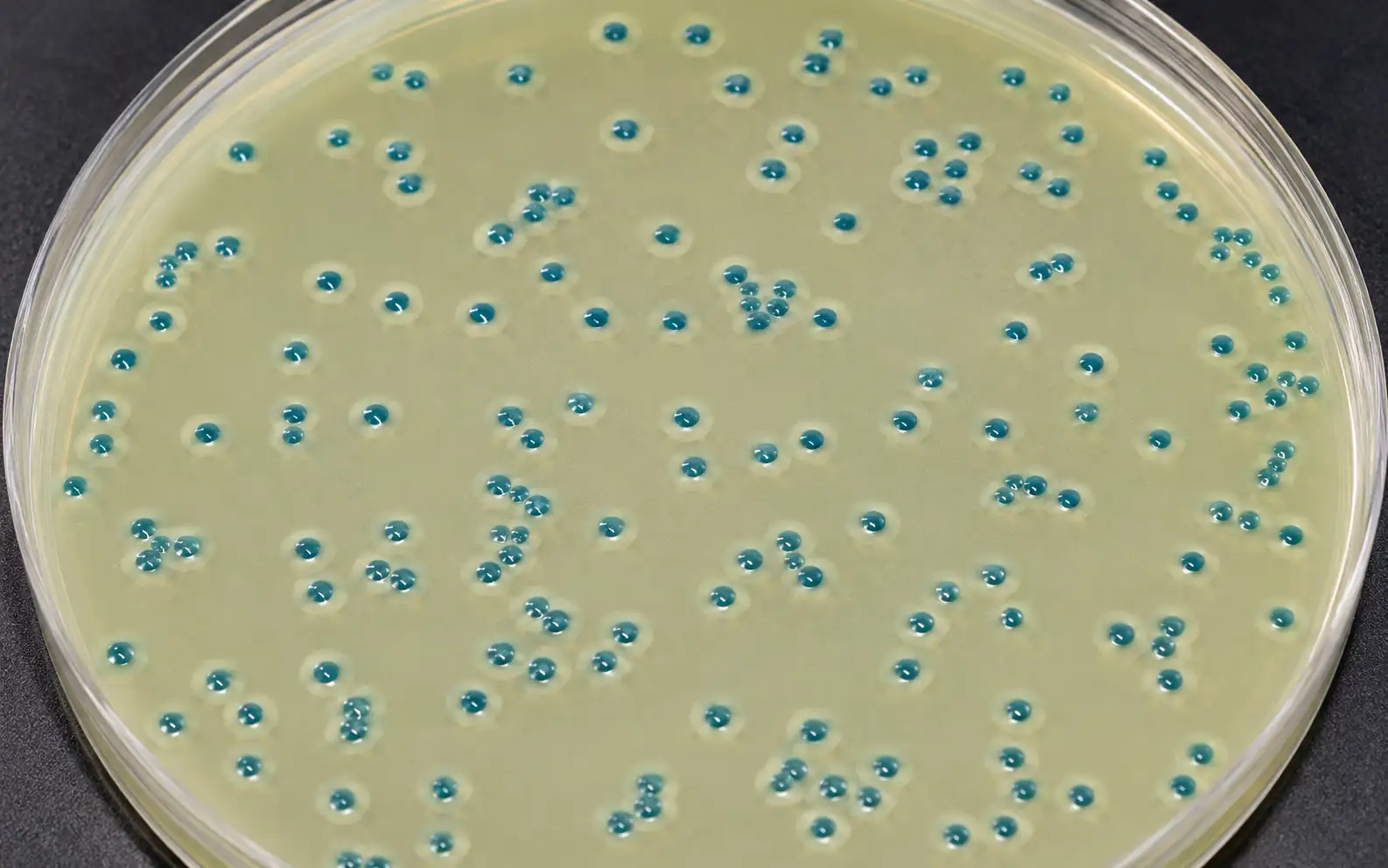
02. Why test for Listeria spp.?
The first half of the Listeria spp vs monocytogenes question is whether the genus as a whole even matters at your sample point. Listeria spp. testing is fundamentally an indicator approach. Detecting any Listeria species reveals what general hygiene indicators like APC or Enterobacteriaceae cannot: the environment supports the survival of a psychrotrophic, biofilm-forming, niche-loving organism. Where L. innocua persists today, L. monocytogenes can persist tomorrow.
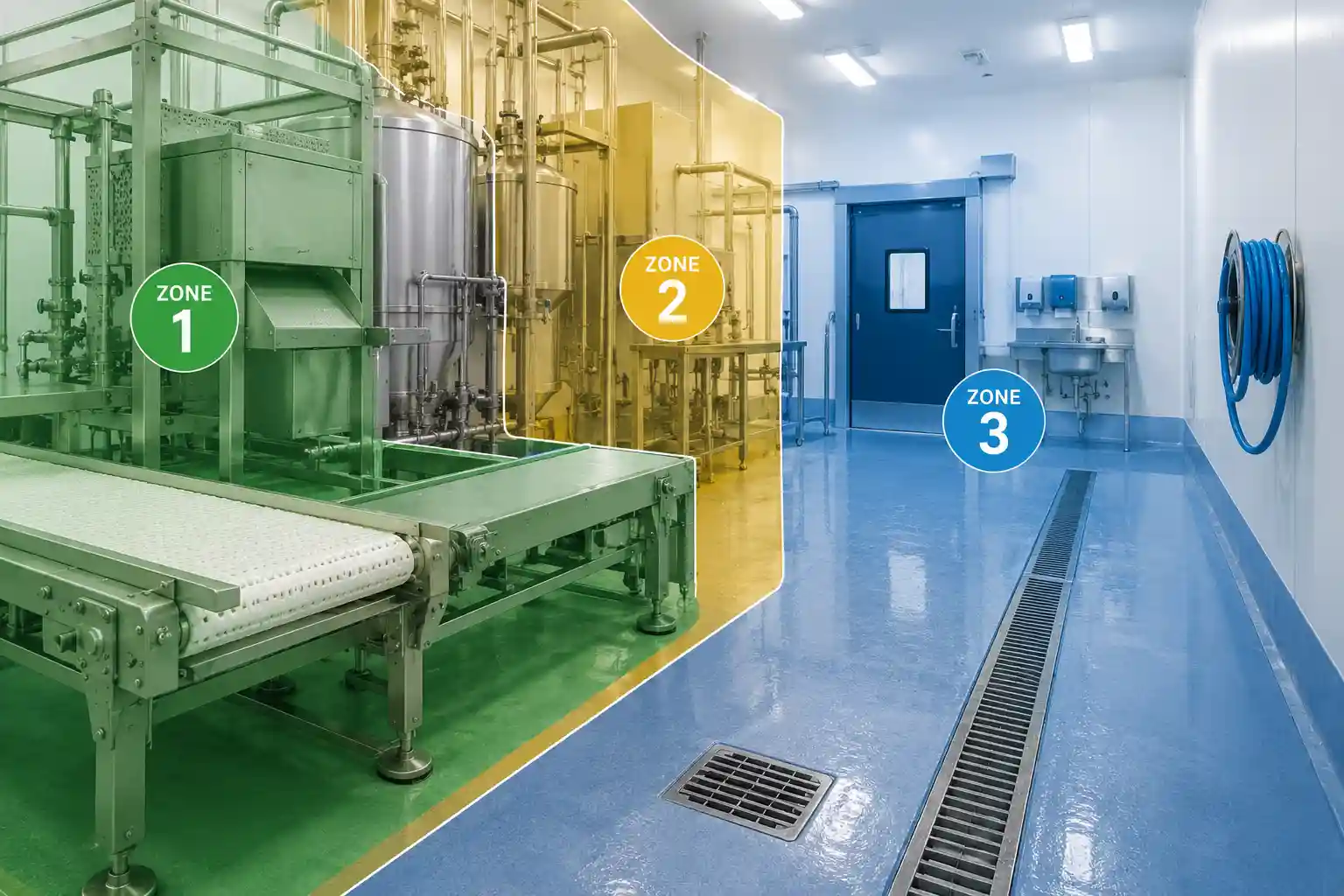
This is why FDA and USDA environmental monitoring programs (EMPs), and most third-party RTE auditors, emphasize Listeria spp. swabbing of Zone 2 and Zone 3 surfaces. The genus-level test is broader, less expensive per swab, and statistically more likely to flag a harborage site before pathogenic L. monocytogenes ever colonizes it.
03. Why test for L. monocytogenes specifically?
Regulatory targets shift the moment you cross from environment to finished product. The FDA's zero-tolerance policy under 21 CFR 117 and the USDA-FSIS Listeria Rule (9 CFR 430) explicitly target L. monocytogenes in RTE foods. A confirmed positive on a finished product is a recall event; a confirmed L. innocua on the same product is not.
That regulatory specificity is mirrored in the laboratory workflow. Species-level L. monocytogenes confirmation is unavoidable on RTE finished product, Zone 1 food-contact surfaces, and any sample whose result appears on a Certificate of Analysis or is reported to a regulator.
04. Method landscape: which standards apply
Three international reference frameworks dominate food and environmental Listeria testing.
05. Distinguishing L. monocytogenes from the rest
The classical confirmation triangle is hemolysis + CAMP test + sugar fermentation. The table below summarises how the six routinely encountered species differ on these characters.
| Species | β-Hemolysis | CAMP (S. aureus) | Rhamnose | Xylose | Pathogenicity |
|---|---|---|---|---|---|
| L. monocytogenes | Narrow zone | + | + | – | Human pathogen |
| L. innocua | – | – | + | – | Non-pathogenic |
| L. seeligeri | Weak | + | – | + | Rare in humans |
| L. welshimeri | – | – | variable | + | Non-pathogenic |
| L. ivanovii | Broad zone | + (with R. equi) | – | + | Ruminant pathogen |
| L. grayi | – | – | + | variable | Non-pathogenic |
Modern labs increasingly skip the full biochemistry and confirm directly by PCR targeting species-specific markers, most commonly hlyA (listeriolysin O), prfA (master virulence regulator), or inlA (internalin A). This compresses confirmation from days to hours.
06. The decision framework
When teams compare Listeria spp vs monocytogenes for any given sample, the practical rule most QA programs converge on is straightforward.
| Sample scenario | Recommended test | Why |
|---|---|---|
| Zone 2 & 3 environmental swabs | Listeria spp. | Early harborage warning. Broader detection at lower per-swab cost. |
| Zone 1 food-contact & finished RTE product | L. monocytogenes | Regulatory and recall stakes demand species-level resolution. |
| Raw ingredients destined for RTE applications | L. monocytogenes | Downstream risk justifies species-level scrutiny. |
| Raw ingredients for thermally processed product | Screen at genus level | Cook step removes risk. Listeria spp. is sufficient. |
Enrich and screen with a Listeria spp. PCR assay, then reflex any presumptive positive into a L. monocytogenes-specific confirmation. You get the sensitivity and cost profile of genus-level screening with the regulatory rigor of species-level reporting.
07. Bottom line
- Listeria spp. is the environmental sentinel, it tells you whether the niche exists.
- L. monocytogenes is the regulatory and recall-defining target, it tells you whether the product is safe to ship.
- Treating them as interchangeable is the single most common cause of misaligned sampling plans, and the single easiest one to fix.