
Pesticide Residue Testing
Accredited Compliance for Importers & Exporters
An ISO/IEC 17025:2017 accredited laboratory in Houston, Texas. Our pesticide residue testing measures your product against the Maximum Residue Limits of the market it is actually sold into US EPA tolerance, EU, or Japan Positive List before customs does it for you.
Pesticide Residue Testing That Prevents Border Rejections, DWPE & RASFF Alerts
A container that clears US EPA tolerances can still be refused at an EU port, because the two systems set limits on completely different bases. The EU harmonises one figure across every member state and drops to a default of 0.01 mg/kg wherever no crop-specific figure exists; the US sets each tolerance crop-by-crop under 40 CFR Part 180. Pass one, fail the other and most exporters only discover the gap after the shipment has sailed.
When a residue breaches the limit for its destination, the cost escalates fast: a detained container accruing demurrage, an FDA Import Alert carrying Detention Without Physical Examination status, an EU RASFF notification circulated to every member state, and a buyer who quietly moves the next order elsewhere. Because residues rarely travel alone, importers usually screen the same lot for heavy metals and aflatoxin and mycotoxin at the same time, and hold the results alongside their wider contaminant and import compliance file.
Not every residue test is about a border, though. Domestic manufacturers, US importers clearing FDA and EPA tolerances, private-label brands, and supplement and botanical companies rely on the same accredited pesticide residue testing for routine QA, supplier verification, and label-claim defence the destination simply decides which limit we report your result against.
AGT Food Labs runs a modified AOAC 2007.01 method (SOP 070) on LC-MS/MS under PJLA ISO/IEC 17025:2017 accreditation, certificate L26-535. Every report states the limit that applies to your destination, the measured concentration, and the reporting limit we achieved the three numbers a customs broker, a retail technologist, or an auditor will ask for.
When You Need Pesticide Residue Testing
Six situations that put a residue certificate on the critical path for importers, exporters, and domestic manufacturers alike.
📦Pre-Shipment Verification
A lot of produce, grain, spice, tea, or dried botanical is booked for export and the importer will not release the letter of credit without a third-party Certificate of Analysis against the destination limits.
🛒Buyer or Retailer Requirement
Major retailers, food-service groups, and private-label brands write residue screening into supplier qualification and annual surveillance. Many specify stricter internal thresholds than the statutory MRL often a fraction of it.
🌱Organic Verification
USDA NOP and EU Organic operators screen incoming raw materials and finished lots to defend the organic claim against spray drift, prohibited treatments, or supplier substitution somewhere upstream.
⚠️Border Detention or Recall Risk
An FDA DWPE listing, a RASFF notification, or a customer complaint has already landed. You need defensible data fast either to release the consignment or to scope the corrective action honestly.
🤝New Supplier Onboarding
A new grower, broker, or contract farm enters the supply chain. A baseline screen establishes whether their material clears the same limits as your approved sources, before volume commitments are made.
📅Annual Surveillance & Due Diligence
Routine lots quarterly, semi-annual, or per harvest build the documented evidence of reasonable care that a regulator or customer will ask for after an incident, not before one.
How Pesticide Residue Testing Works Sample to Certificate
A standardised pesticide residue testing workflow — QuEChERS extraction and LC-MS/MS — reported against your destination limits.
Our Pesticide Residue Testing Services
Screening packages built for produce, grain, spice, tea, and botanical manufacturers, importers, and exporters.
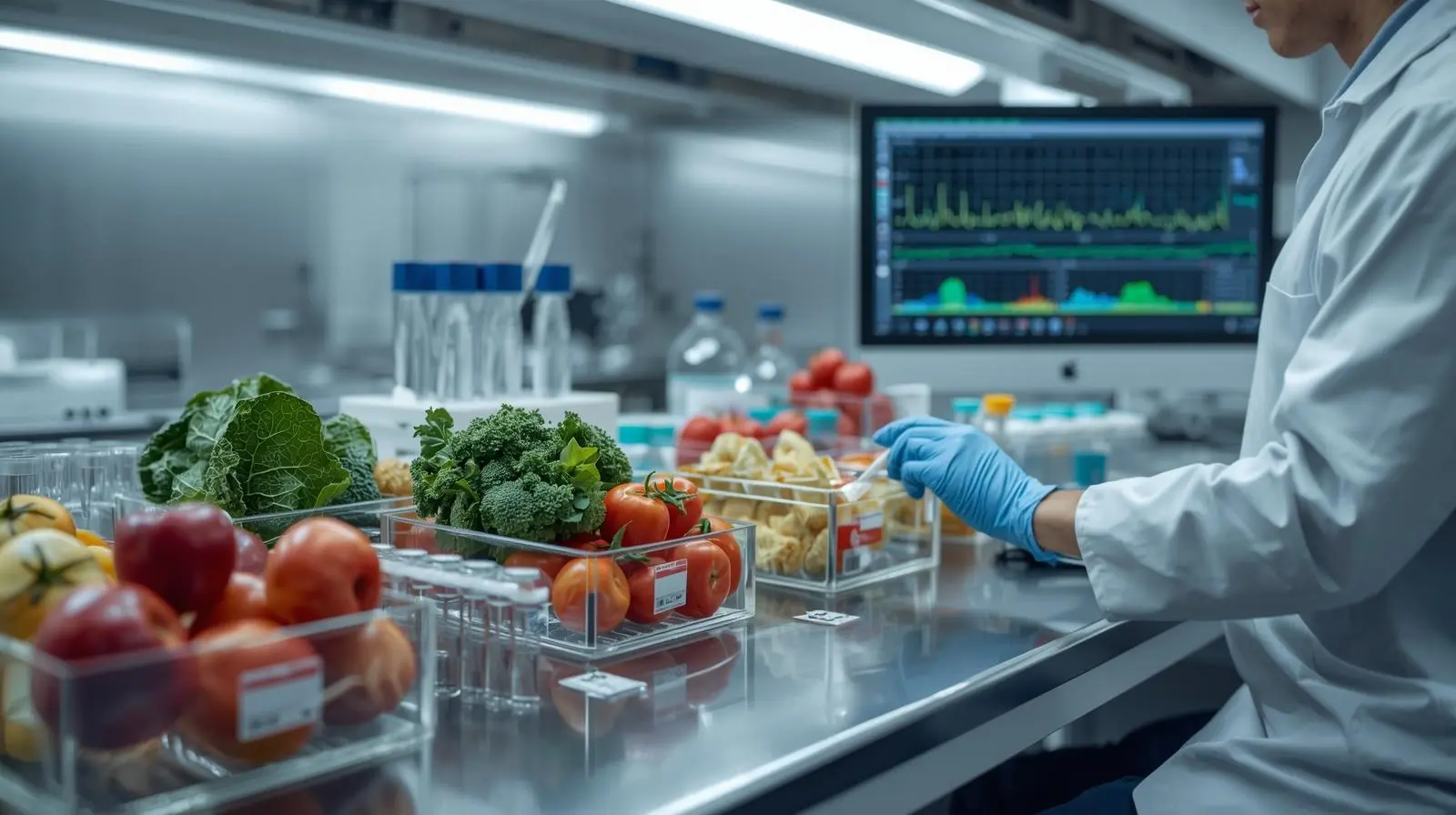
Multi-Residue Pesticide Screen by LC-MS/MS
Our flagship pesticide residue panel measures a broad range of polar and semi-polar active ingredients in a single LC-MS/MS run under modified AOAC 2007.01 (SOP 070), covering the chemical classes that dominate current registrations — organophosphates, carbamates, triazole fungicides, strobilurins, and neonicotinoids.
Difficult matrices are the point. Spices, tea, dried botanicals, and essential oils defeat a lot of standard panels: chlorophyll, capsaicinoids, and other co-extractives suppress or enhance ionisation and manufacture false positives. We apply targeted dispersive cleanup with PSA (primary secondary amine) and GCB (graphitised carbon black) to strip pigment and co-extractives before injection, so the number on your certificate reflects the sample rather than the matrix.
- Organophosphates (Chlorpyrifos)
- Carbamates
- Triazole Fungicides
- Strobilurins
- Neonicotinoids
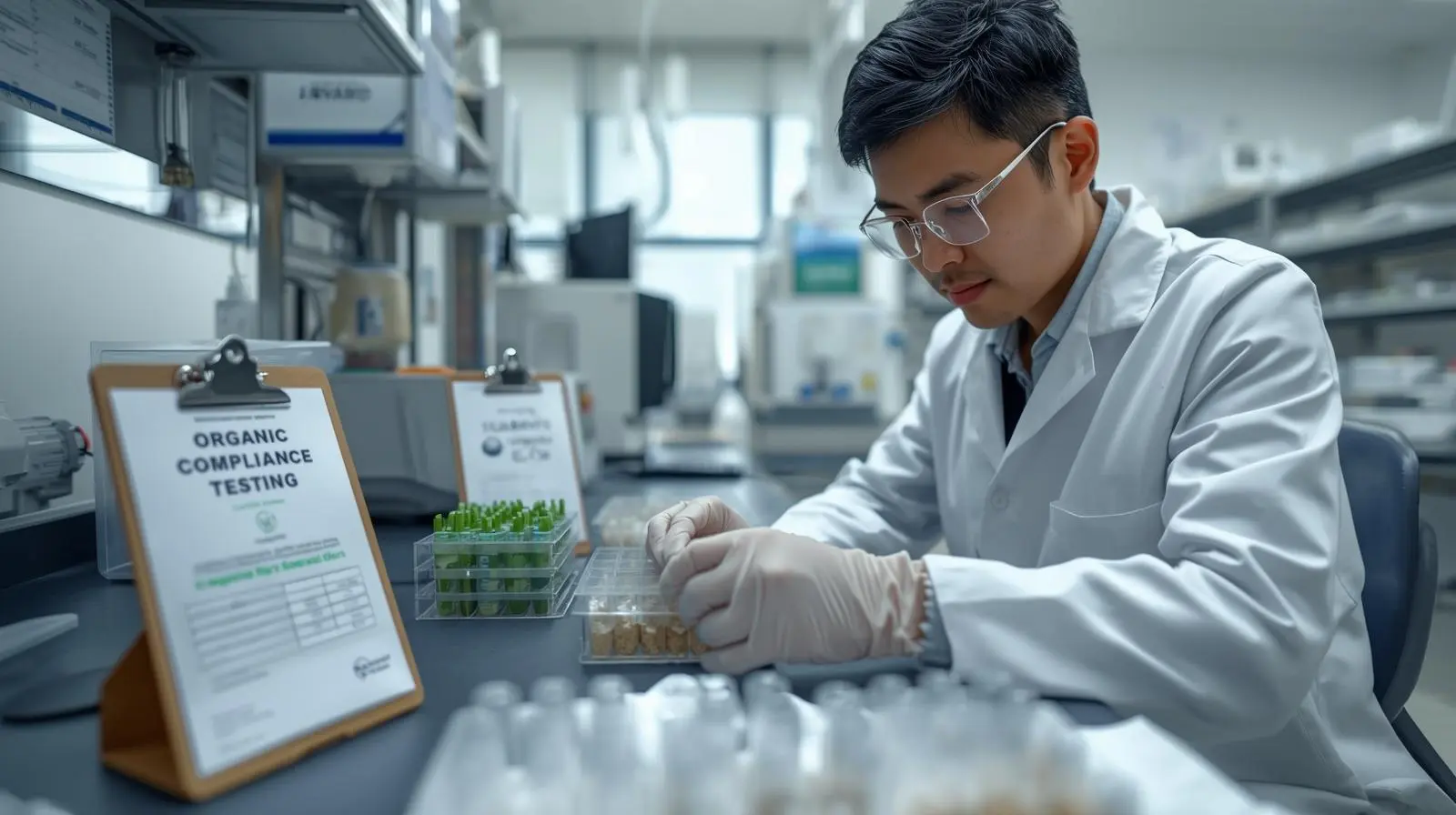
Organic Verification Screening
An organic claim is only as strong as the evidence behind it. Our LC-MS/MS panel screens for the synthetic actives prohibited under the USDA National Organic Program and EU Organic regulation, where a single trace detection can trigger an investigation and suspend certification.
We include Piperonyl Butoxide (PBO) as standard — a synergist frequently formulated into "natural" pyrethrum products, prohibited in organic production, and one of the more common causes of an otherwise unexplained positive on an organic lot.
Methods & Instruments
Reporting limits low enough to satisfy the EU default of 0.01 mg/kg.
| Method Name | Reference | Instrumentation | Typical LOQ |
|---|---|---|---|
| QuEChERS Sample Preparation | AOAC 2007.01 (modified), SOP 070 | Sample Prep | N/A |
| Multi-Residue Pesticide Screen | AOAC 2007.01 (modified), SOP 070 | LC-MS/MS | 0.01 mg/kg (10 ppb) |
Why LC-MS/MS Is the Reference Platform for Pesticide Residue Testing
Liquid chromatography with tandem mass spectrometry separates analytes by polarity, then confirms each one through two independent mass transitions. That dual confirmation is what allows quantitation at 0.01 mg/kg without the false positives that make a certificate unusable. It also suits the chemistry of the modern portfolio: triazoles, strobilurins, neonicotinoids, carbamates, and most organophosphates are polar or semi-polar, so they ionise cleanly without derivatisation or the volatility constraints of older techniques. Our accredited scope was built around this platform for that reason, and it is why results hold up in front of EU, Japanese, and US reviewers.
Scope note: Our accreditation covers pesticides amenable to LC-MS/MS — the polar and semi-polar actives that make up the majority of today's registered products. GC-amenable legacy classes (organochlorines, pyrethroids, and dithiocarbamates) fall outside this scope, and we coordinate them with partner laboratories whenever a full multi-class panel is required. We would rather tell you that up front than have it surface in an audit.
Industries We Serve
Every vertical that ships food or botanicals into a residue-regulated market.



Global MRL Compliance
We report your pesticide residue result against the regulatory database of the market you are shipping to, not a generic panel.
United States — 40 CFR Part 180
EPA sets tolerances crop-by-crop, and the FDA treats any product exceeding one as adulterated under the FD&C Act. Where no US tolerance exists for a crop-active pairing, the effective limit is zero. Codex figures apply only where a country has adopted them.
European Union — Reg. 396/2005
The strictest framework in commercial use. Where no crop-specific limit is published, the default falls to 0.01 mg/kg — effectively zero tolerance. Our reporting limits are set to meet that floor rather than approach it.
Japan — Positive List System
Any active absent from the Positive List defaults to 0.01 ppm. We screen specifically for the actives Japanese quarantine monitors most often on imported produce, tea, and botanicals.
Frequently Asked Questions
Pesticide residue testing, Maximum Residue Limits, export thresholds, and what to do when a result comes back over.
What does "MRL" mean?
How do I find the MRL that applies to my commodity and destination?
Will my results be accepted by EU customs and Japanese quarantine?
What happens if a result exceeds the MRL?
Can you test high-pigment spices, tea, and botanicals?
How do EU limits differ from US EPA tolerances?
Do you screen for substances prohibited under USDA NOP and EU Organic?
How fast can you turn a shipment around?
Export with Confidence.
Get your lot measured against the limits of the market you are shipping to — by an accredited laboratory in Houston, Texas.
Request a Pesticide Residue Testing Quote