
Food Allergen Testing
& Gluten-Free Verification
Protect your consumers and verify your "Free From" labels with ISO/IEC 17025:2017 accredited Gluten-Free verification, plus quantitative screening for the FDA "Big 9" allergens and environmental cleaning validation.
Prevent Recalls with Reliable Food Allergen Testing
Undeclared allergens are consistently the leading cause of Class I food recalls in the United States, according to FDA recall and Reportable Food Registry data. Under the FASTER Act of 2021, manufacturers must label nine major allergens, including sesame, which took effect on 1 January 2023. Accurate compliance combines allergen verification with strong nutritional analysis and food labeling data on the final pack.
AGT Food Labs supports your "Free From" claims through validated commercial ELISA methods. Whether you need to confirm a gluten-free production run or validate your facility's food hygiene and cleaning procedures to prevent cross-contact, our food allergen testing program delivers actionable data for your Allergen Control Plan.
Scope note: Allergen analysis is performed at our Houston, TX facility. Our PJLA ISO/IEC 17025:2017 accreditation (Accreditation No. 117946, Cert L26-535) includes Gluten/Gliadin by R5 ELISA (Veratox for Gliadin R5, SOP 041) — the method used for FDA Gluten-Free verification — on food products, environmental sponges and swabs, and water. This method is additionally recognized under the FDA LAAF program. The broader FDA Big 9 allergen panel, sulfites, and competitive ELISA for hydrolyzed products are offered as validated in-house screening outside the accredited scope; ISO/IEC 17025:2017 accredited reporting for those analytes is available through our partner laboratory network when required.
The Food Allergen Testing Workflow
Enzyme-Linked Immunosorbent Assay (ELISA) for precise allergenic protein detection.
Our Food Allergen Testing Services
Comprehensive screening for ingredients, finished products, and manufacturing surfaces.
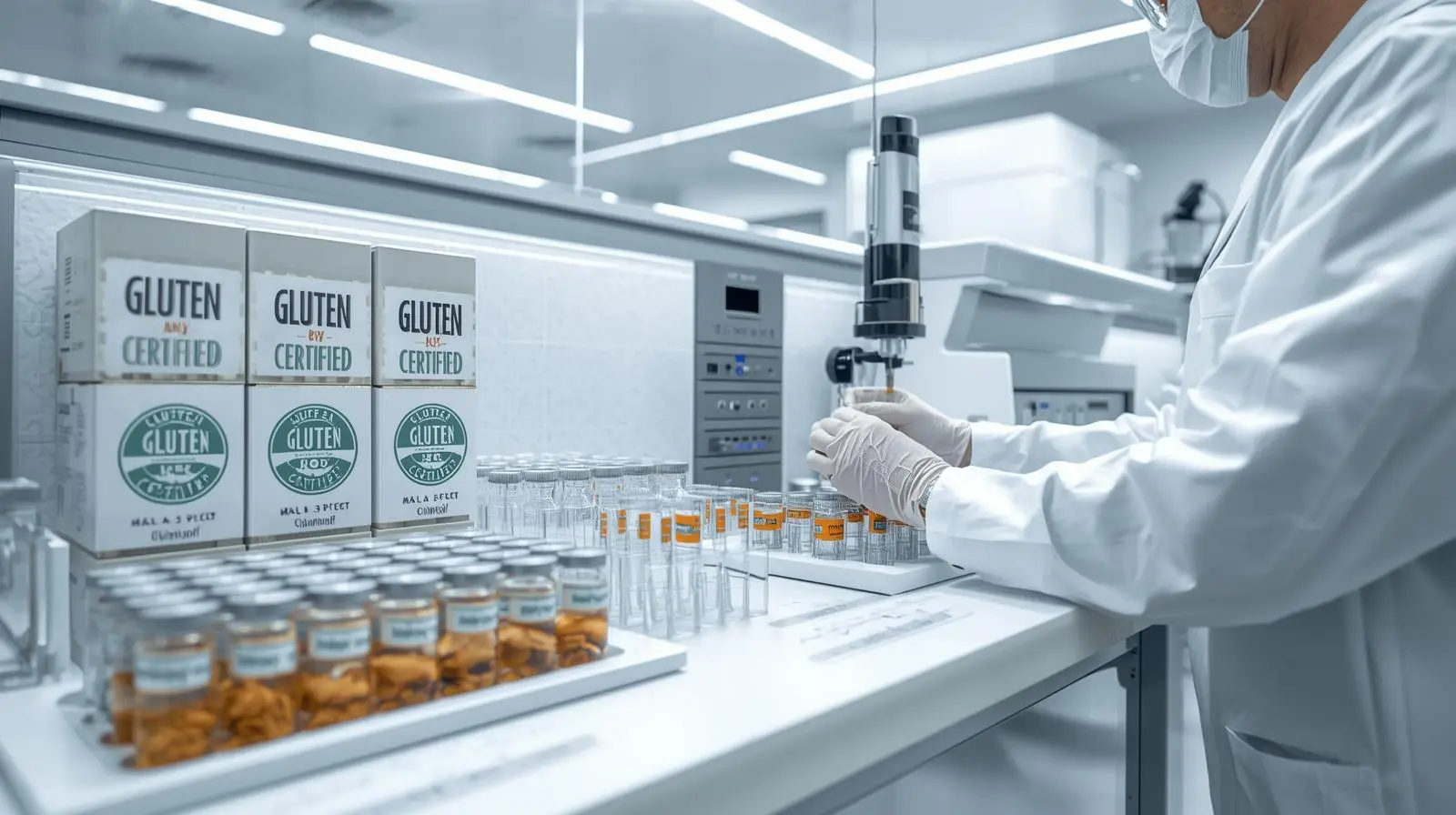
Gluten-Free Verification
To label a product "Gluten-Free," the FDA requires it to contain less than 20 parts per million (ppm) of gluten. Our Gluten/Gliadin analysis uses the R5 antibody method (Veratox for Gliadin R5) under SOP 041 to detect gluten from wheat, rye, and barley, with a limit of quantitation of 5 ppm — well below the regulatory threshold.
Within our PJLA ISO/IEC 17025:2017 accredited scope (Cert L26-535, Houston, TX) and recognized under the FDA LAAF program, for food products, environmental sponges and swabs, and water.
Hydrolyzed & fermented products: Standard sandwich ELISA can under-report on fermented and hydrolyzed products such as beer, soy sauce, and sourdough, because the gluten has been broken into fragments the sandwich format cannot bridge. For these matrices we run a competitive ELISA, which detects those peptide fragments.
Competitive ELISA for hydrolyzed and fermented products is validated in-house screening and sits outside the current accredited scope. Where an accredited result is required for a hydrolyzed product, we coordinate testing through our partner laboratory network.
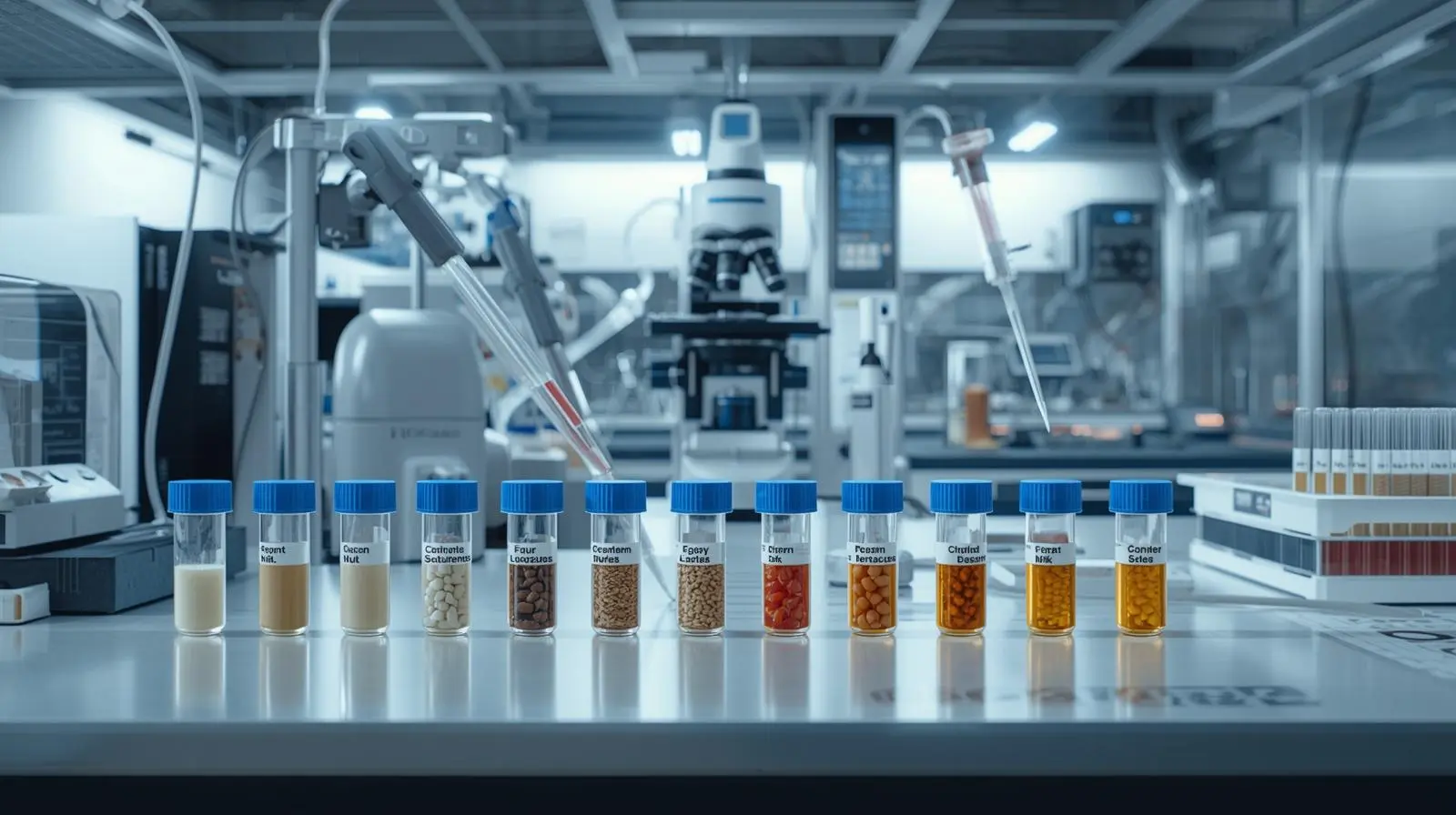
The "Big 9" Allergen Screen
We screen for all major allergens mandated by US law using validated commercial ELISA kits. Quantitative data supports VITAL 3.0 risk assessment, moving you beyond a simple pass/fail answer. We also apply the FDA's definition of tree nuts, which includes coconut — a common compliance trap for manufacturers.
- Peanuts & Tree Nuts (Almond, Walnut, Cashew, Pecan)
- Milk (Casein & Beta-Lactoglobulin)
- Egg (Ovalbumin)
- Soy, Wheat, Fish, Crustacean
- Sesame (Newest FDA Requirement)
The Big 9 allergen panel, other than Gluten/Gliadin, is offered as validated in-house screening outside the current PJLA accredited scope. Accredited reporting is available through our partner network.
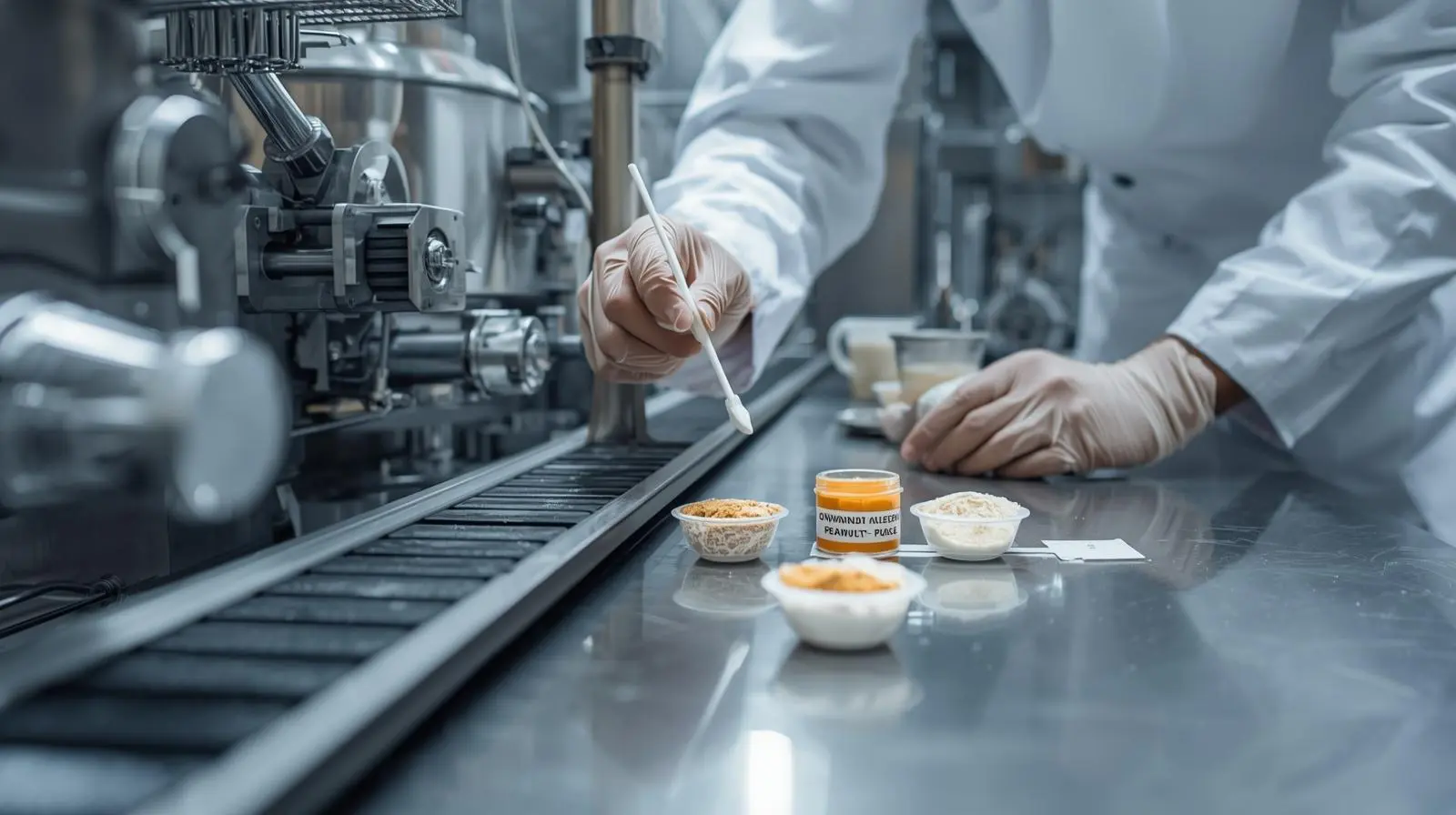
Environmental Allergen Swabs
Preventing cross-contact is the heart of any Food Safety Plan. If you run allergenic and non-allergenic lines in the same facility, you need evidence that your sanitation actually works.
We provide environmental allergen swab kits for sampling equipment surfaces such as mixers, conveyor belts, and fillers. Swabs are analyzed to confirm that Clean-in-Place procedures remove allergenic proteins, supporting FSMA Preventive Controls expectations.
Gluten/Gliadin environmental swabs are within our accredited scope (SOP 041, ISO/IEC 17025:2017 and FDA LAAF). Swabs for other allergens are offered as in-house screening.
Detection Limits (LOQ)
Validated commercial ELISA kits with low-ppm sensitivity for trace allergenic proteins.
| Allergen | Method | Limit of Quantitation (LOQ) | Accreditation Status |
|---|---|---|---|
| Gluten (Gliadin) | R5 ELISA, SOP 041 | 5.0 ppm | PJLA accredited · FDA LAAF |
| Peanut | Quantitative ELISA | 2.5 ppm | In-house screening — not accredited |
| Milk (Total) | Quantitative ELISA | 2.5 ppm | In-house screening — not accredited |
| Egg | Quantitative ELISA | 2.5 ppm | In-house screening — not accredited |
| Soy | Quantitative ELISA | 2.5 ppm | In-house screening — not accredited |
| Almond / Walnut | Quantitative ELISA | 2.5 ppm | In-house screening — not accredited |
| Sesame | Quantitative ELISA | 5.0 ppm | In-house screening — not accredited |
| Sulfites | Optimized Monier-Williams | 10.0 ppm | In-house screening — not accredited |
Gluten/Gliadin by R5 ELISA (SOP 041) is run at our Houston, TX facility under PJLA ISO/IEC 17025:2017 accreditation and is recognized under the FDA LAAF program. The remaining allergen and sulfite methods are commercial validated kits run as in-house non-accredited screening. Where an accredited Certificate of Analysis is required for those analytes — for retailer audits, customs documentation, or regulatory submissions — results are issued through our accredited partner laboratory network.
Industries We Serve
Food allergen testing across every food and beverage category that carries an FDA "Free From" claim.

Common Triggers for Food Allergen Testing
Most manufacturers commission food allergen testing when one of these situations comes up.
Pre-Launch Verification
A new SKU, recipe, or co-pack run is heading to market and you need a documented Big 9 baseline before printing labels and shipping. Our packaged food launch testing checklist sets out what else belongs in that first round.
Retailer or Buyer Audit
A major retailer, food-service buyer, or private-label brand has requested third-party allergen verification as part of supplier qualification or annual surveillance.
FSMA Allergen Control Plan
Your written Food Safety Plan requires periodic verification of allergen-control preventive measures. Environmental swabs and finished-product checks both feed this evidence file.
Recall or Complaint Investigation
A consumer reaction, retailer complaint, or undeclared-allergen alert needs a fast quantitative answer to size the issue and scope a corrective action.
"Free From" Certification
Programs such as the Gluten-Free Certification Organization (GFCO) require ongoing allergen evidence for renewal cycles.
Cleaning Validation
A new piece of shared equipment or a change to a CIP procedure needs validation that protein removal works before production resumes.
Regulatory Compliance
Meeting US allergen labeling requirements.
FALCPA & FASTER Act
Our food allergen testing program covers all nine major allergens defined by the Food Allergen Labeling and Consumer Protection Act and the FASTER Act, which added sesame with effect from 1 January 2023.
FDA Gluten-Free Rule
We verify compliance with 21 CFR 101.91 under our accredited SOP 041 method (ISO/IEC 17025:2017 and FDA LAAF), confirming your product tests below the 20 ppm threshold required for "Gluten-Free" claims.
FSMA Preventive Controls
Our environmental swabbing program supports your written Allergen Control Plan, a key requirement for FSMA Preventive Controls audits.
Frequently Asked Questions
Common questions about allergen thresholds, testing methods, and accreditation scope.
Is AGT's food allergen testing PJLA-accredited?
What are the "Big 9" allergens?
Is coconut considered a tree nut by the FDA?
Does a "May Contain" label remove the need to test?
Why use ELISA instead of PCR?
Can you test hydrolyzed or fermented products like beer and soy sauce?
Verify Your "Free From" Claims
Tell us your product and target claim. We'll confirm the method, the accreditation status of each analyte, and turnaround before you ship.
Request an Allergen Quote