
Bacterial Endotoxin
Testing
Ensure the safety and compliance of your pharmaceutical and purified water systems with quantitative Bacterial Endotoxin testing accredited to ISO/IEC 17025:2017 by PJLA, strictly adhering to USP Chapter 86 methodology.
Our Standard: Precision in Pyrogen Detection
In pharmaceutical, cosmetic, and critical water applications, undetected pyrogens can lead to severe adverse patient reactions and product recalls. Bacterial endotoxins—lipopolysaccharides found in the outer membrane of Gram-negative bacteria—are highly heat-stable and persist even after sterilization processes destroy the living bacteria.
Scope note: Our Bacterial Endotoxin testing is performed under strict quality controls at our Houston laboratory. Specifically, these methodologies are accredited to ISO/IEC 17025:2017 by PJLA (Certificate L24-482-R2, Accreditation #117946). We execute testing exactly to USP Chapter 86, USP <61>, USP <62>, and USP <60> specifications, providing you with globally recognized and defensible data for your release criteria.
Accredited USP Analytical Services
We deliver quantitative endotoxin and microbial limit testing to verify the purity of your process water, cosmetics, and finished dietary products, fully aligning with pharmacopeial standards.
| Parameter Tested | Accredited Method | Matrix Tested | Technique / What It Indicates |
|---|---|---|---|
| Bacterial Endotoxin | USP Chapter 86 | Water | Quantitative / Gram-negative bacterial pyrogen load |
| Total Aerobic Microbial Count (TAMC) | USP <61> (SOP 059) | Pharmaceutical, Cosmetics, Dietary Supplements | Traditional Microbial Culturing for Quantitative Enumeration |
| Total Yeast and Molds Count (TYMC) | USP <61> (SOP 059) | Pharmaceutical, Cosmetics, Dietary Supplements | Traditional Microbial Culturing for Quantitative Enumeration |
| Objectionable Organisms (e.g., E. coli, Salmonella, S. aureus, P. aeruginosa) | USP <62>, USP <60> (SOP 060) | Pharmaceutical, Cosmetics, Dietary Supplements | Traditional Microbial Culturing for Qualitative Determination |
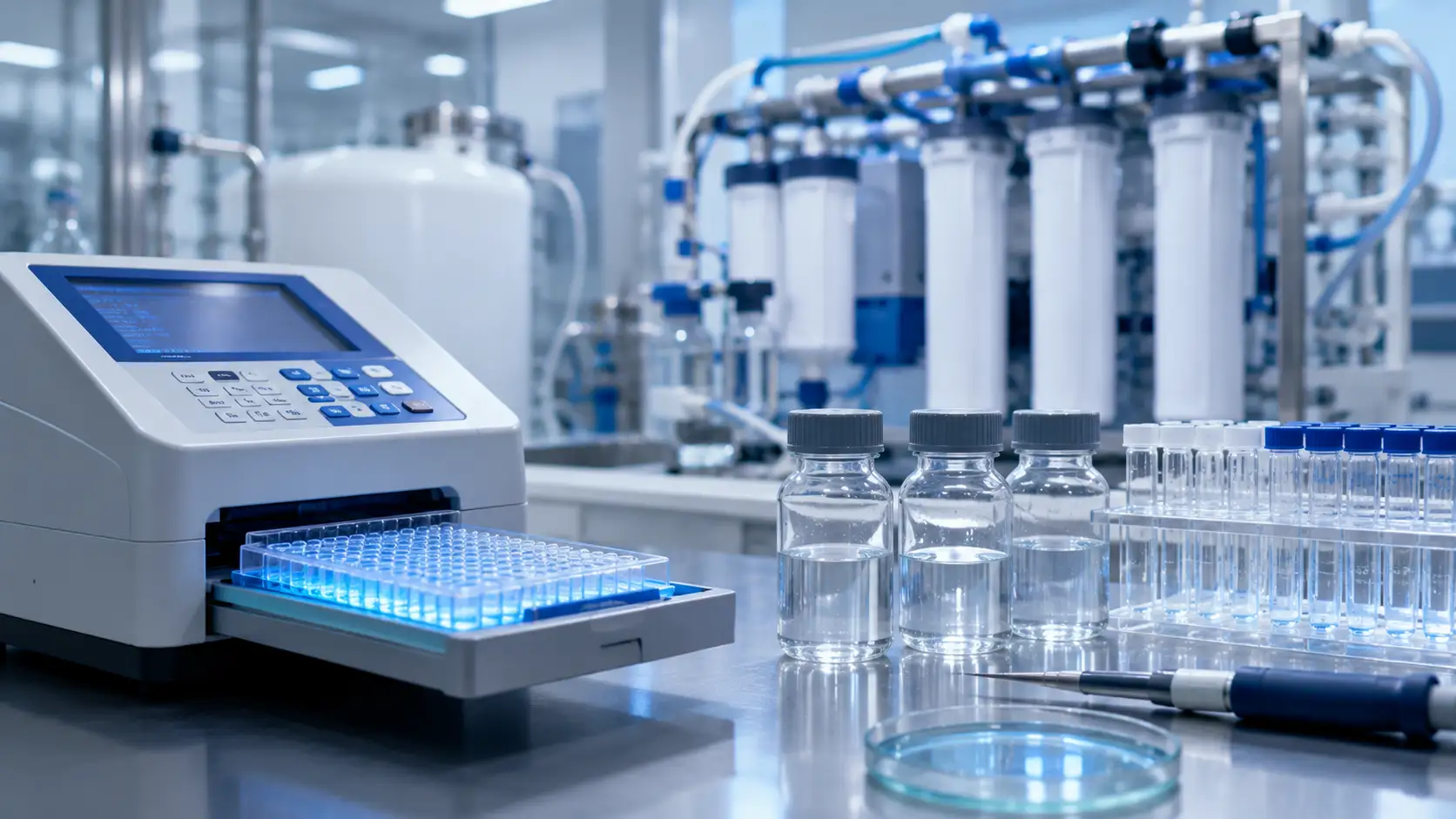
Bacterial Endotoxin Testing (USP 86)
Our quantitative Bacterial Endotoxin analysis ensures that process water, Water for Injection (WFI), and Purified Water meet strict regulatory limits. Because endotoxins cannot be removed by standard sterilization, detecting their presence through USP Chapter 86 methodology is a mandatory release criterion for critical manufacturing lines.
- USP Chapter 86
Technique: Quantitative | Matrix: Water | Accreditation: PJLA ISO/IEC 17025:2017 (Houston)
Industry Application:Crucial for validating reverse osmosis (RO) systems, distillation units, and piping loops in pharmaceutical and compounding facilities where endotoxin limits are strictly governed.
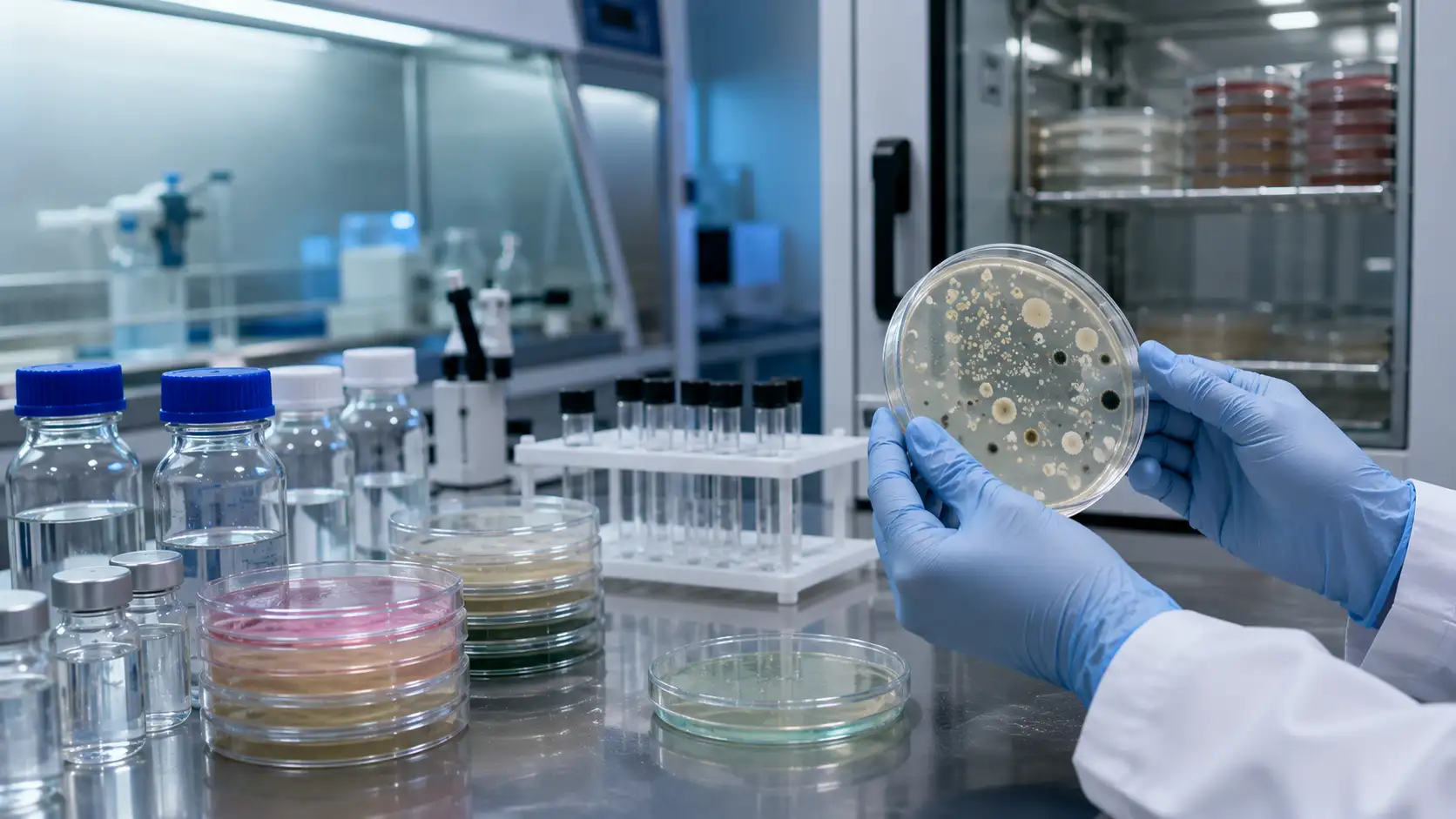
Microbial Enumeration (USP <61>)
Endotoxin testing often pairs with broader bioburden assessments. We provide full traditional microbial culturing for Total Aerobic Microbial Count (TAMC) and Total Yeast/Molds Count (TYMC) as defined in USP 61 and SOP 059 to establish your baseline product purity.
- USP <61> (SOP 059)
Matrices: Pharmaceutical, Cosmetics, Dietary Supplements.
Integrated Quality Assurance:Traditional microbial culturing for quantitative enumeration provides the raw counts required to verify your product remains below its specified bioburden threshold.
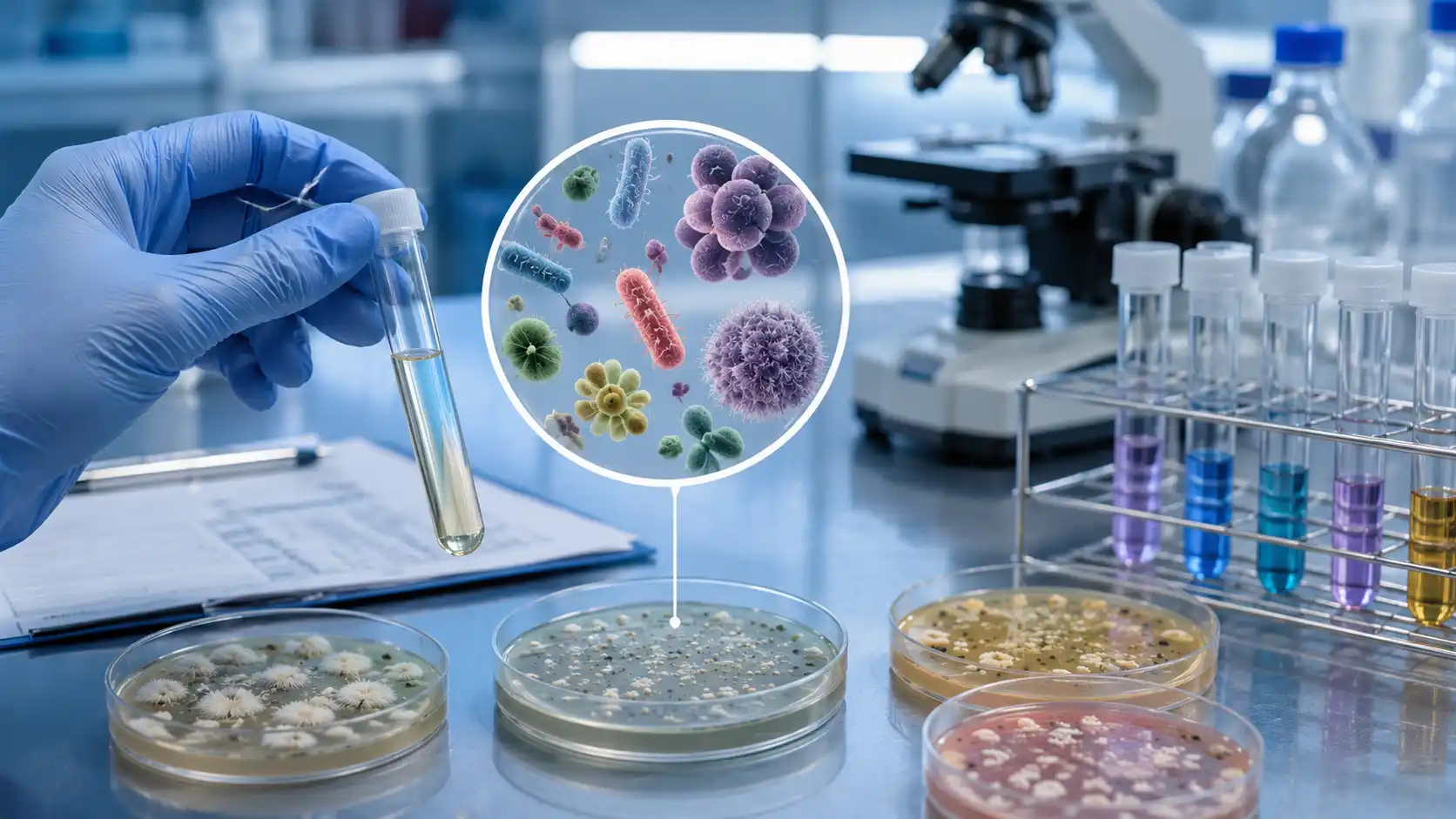
Specific Microorganisms (USP <62> / <60>)
Beyond general counts, certain pathogens must be completely absent from pharmaceutical and personal care products. We perform qualitative determinations for a comprehensive list of objectionable organisms using traditional microbial culturing (SOP 060).
- USP <62>, USP <60> (SOP 060)
Bile tolerant Gram-Negative Bacteria, Escherichia coli, Salmonella, Pseudomonas aeruginosa, Staphylococcus aureus, Clostridia, Candida albicans, and Burkholderia Cepacia.
Water System Monitoring & Sampling
Maintaining endotoxin-free water requires vigilant monitoring of the entire distribution loop. We support your facility's sampling plan to identify biofilm buildup or system degradation before they cause an out-of-specification (OOS) event.
Monitoring the incoming city or municipal water establishes your baseline microbial load before it enters your facility's purification system.
Testing water immediately after Reverse Osmosis or Deionization beds verifies that the primary purification steps are effectively stripping out endotoxins.
Sampling from holding tanks and return loops helps detect the formation of Gram-negative biofilms that shed endotoxins into the system over time.
The most critical testing point: verifying that the water drawn at the actual manufacturing line or compounding station meets USP 86 endotoxin limits.
Following hot-water, steam, or chemical sanitization, testing confirms the cycle actually cleared the biofilm — and that no residual endotoxin remains in the loop before release.
Scheduled sampling builds the data trend that reveals slow system drift, and gives you defensible results to isolate the source when an out-of-specification event occurs.
Industries Relying on Our USP Testing
Our quantitative endotoxin and microbial limit testing supports strict regulatory compliance across multiple critical sectors.
Pharmaceuticals
Cosmetics

Dietary Supplements
Why Choose AGT Food Labs?
Analytical rigor backed by international accreditation for your most critical compliance needs.
Our Houston facility (PJLA Accreditation #117946, Cert L24-482-R2) ensures every test result is generated under a globally recognized quality management system.
We strictly follow USP Chapter 86 for Bacterial Endotoxins, and USP <61>, <62>, <60> for microbial limits, preventing audit failures and regulatory friction.
You get direct access to our laboratory managers to help investigate out-of-specification results and advise on water system remediation strategies.
Common Questions About Endotoxin & Microbial Testing
Is your Bacterial Endotoxin testing accredited?
What matrices do you test for endotoxins and microbial limits?
Do you offer TAMC and TYMC testing?
Can you screen for objectionable organisms?
Verify Your System's Purity Today
Ensure regulatory compliance with ISO/IEC 17025:2017 accredited quantitative Bacterial Endotoxin and USP Microbial Limits testing.
Request Testing Services