
Introduction
If your shipment has been stopped at a U.S. port of entry without anyone physically opening the container, you need to understand the FDA detention release process fast.
As a result, every future shipment from your firm and possibly every shipment from your country of origin can be detained automatically at the border.
However, a detention is not the end of the road. In fact, the FDA explicitly provides a window to overcome the appearance of violation through accredited third-party lab testing and supporting documentation. Below is a step-by-step guide to working through it.
What Is a DWPE Alert?
Detention Without Physical Examination or DWPE is the FDA's authority under FD&C Act Section 801 to detain an imported product at the border based solely on documented prior evidence of violations. Importantly, the agency does not need to test or open the current shipment.
Furthermore, the FDA maintains over 230 active import alerts covering thousands of firms in more than 100 countries. Each alert has three lists:
- Red List — firms or products subject to automatic detention. This is where you do not want to be.
- Yellow List — products under heightened FDA scrutiny without automatic detention.
- Green List — firms exempt from DWPE under a country-wide or product-wide alert.
In other words, if your firm or product appears on the Red List of any active import alert, every future shipment matching the alert criteria is flagged for detention the moment it arrives.
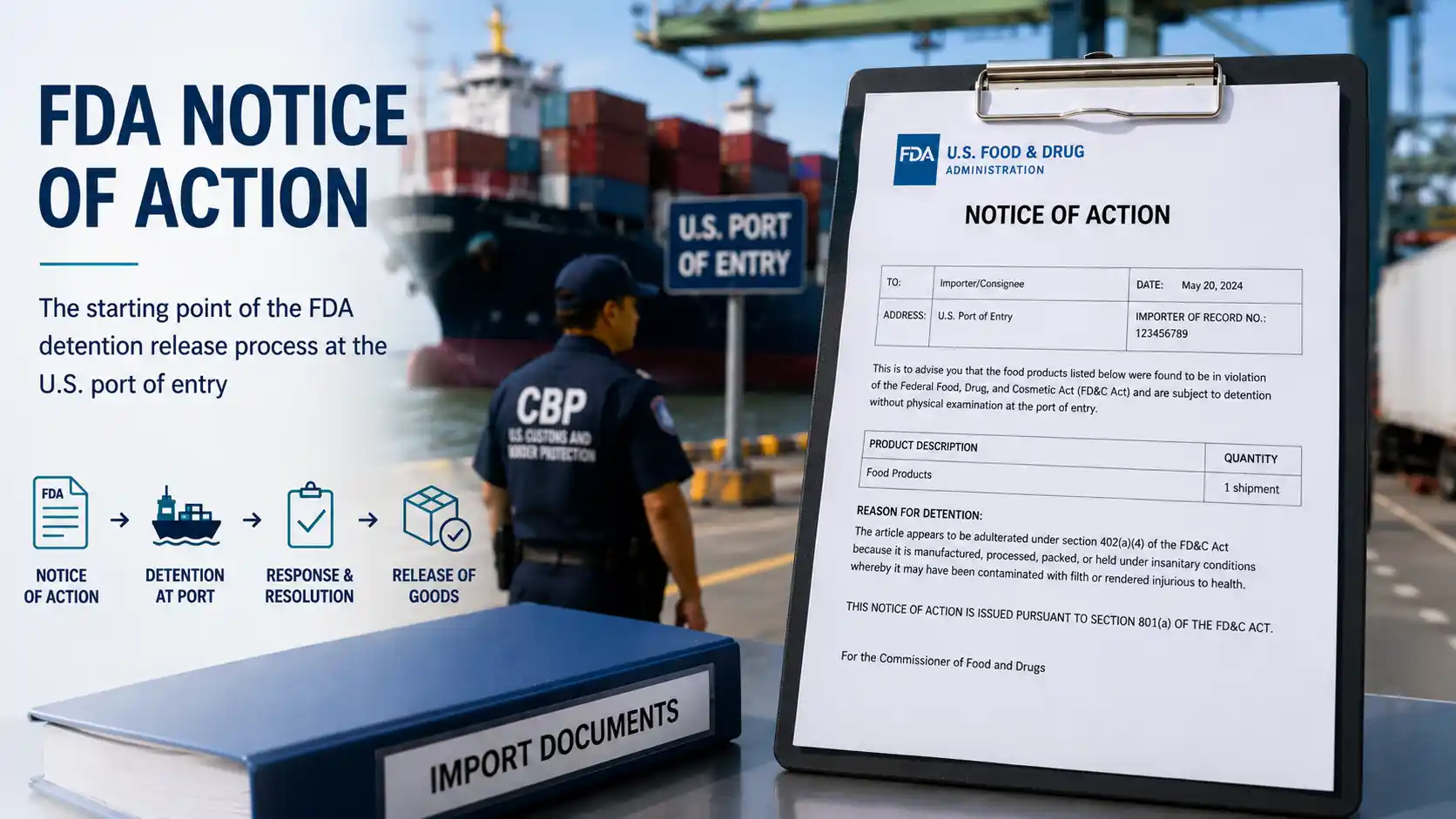
How a Detention Happens
Generally, firms land on the Red List through one of several pathways. For example, FDA field staff may pull a sample at the border that fails laboratory analysis. Alternatively, an FDA foreign facility inspection may uncover non-compliance. In some cases, the trigger is country wide for instance, all shipments from a region after a major incident.
Specifically, the most common triggers for an FDA detention include:
- Pesticide residues exceeding the U.S. tolerance or maximum residue limit (MRL)
- Pathogens such as Salmonella , Listeria or monocytogenes ,E. coli
- Heavy metal contamination (lead, cadmium, arsenic, mercury)
- Mycotoxins, particularly aflatoxin in tree nuts and grains
- Undeclared allergens, color additives, or filth
- Labeling violations or misbranded products
According to Safe Food Alliance data, aflatoxin accounts for roughly 45% of detention citations they handle, followed by pesticides (19%), pathogens (16%), and quality issues (16%).
The 10-Day Response Clock
Once your shipment is detained, the FDA mails a Notice of FDA Action also referred to as FDA Form 2535 to the importer and the customs broker. Critically, this document triggers the strict regulatory clock that defines the entire FDA detention release process.
Therefore, the importer has 10 working days to either submit evidence overcoming the violation or request a hearing. Indeed, missing this window almost always leads to refusal of admission, which is far harder to overturn than a detention.
The respond-by date is the deadline to respond — not the deadline to complete lab testing. Notify the FDA Compliance Officer before that date that testing is underway, and request an extension if needed.
Step-by-Step Release Process
Below is the step-by-step walkthrough of the FDA detention release process for an individual shipment:
Identify the exact violation cited, the specific Import Alert number, and the respond by date. Furthermore, note the compliance officer's contact details, as all subsequent communication flows through them.
Submit a written response confirming you intend to overcome the detention. In addition, state which evidence is being prepared (e.g., third-party lab testing for the violation in question).
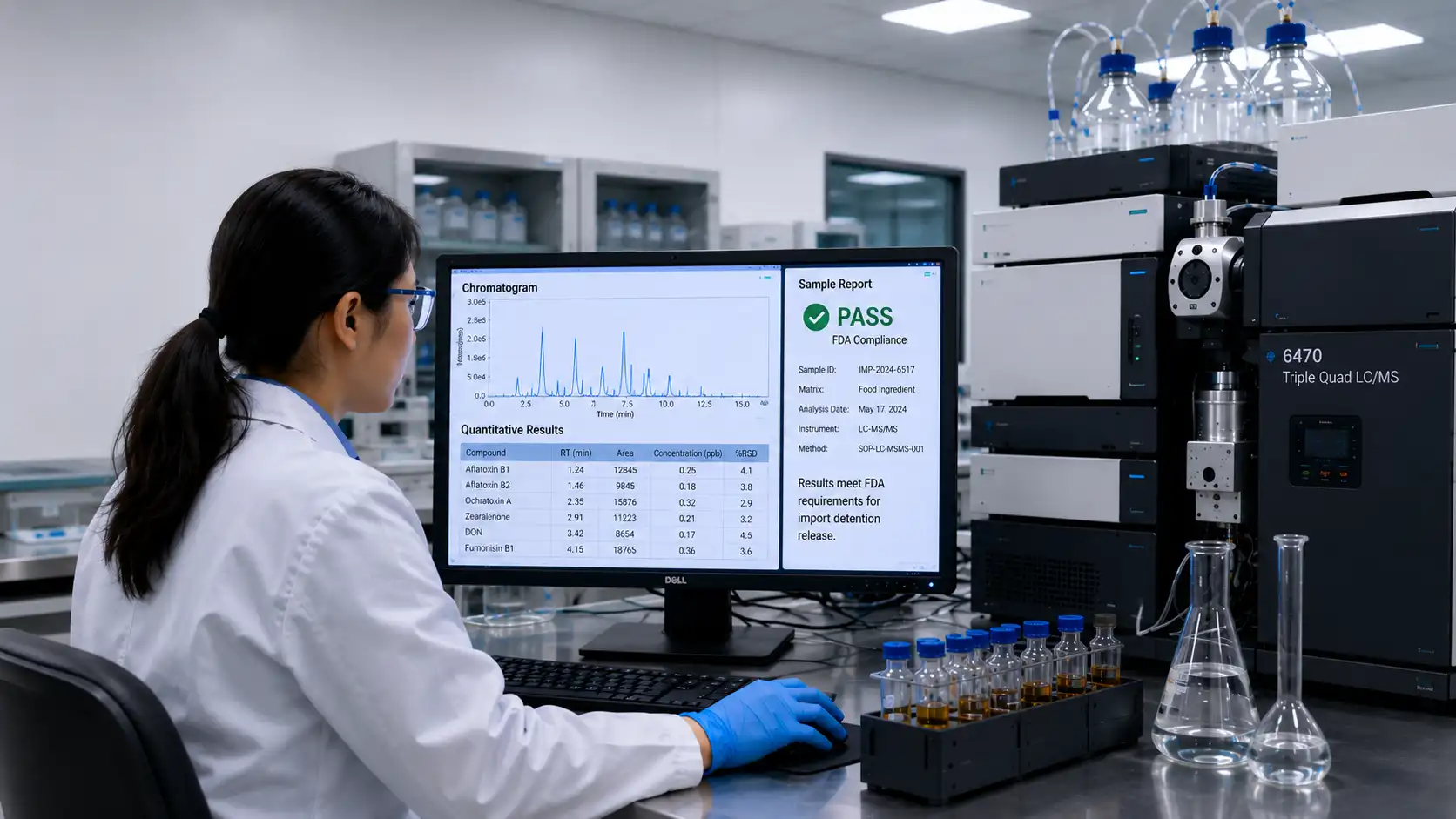
The lab must be capable of running the specific analyte cited in the alert. For instance, an aflatoxin detention requires HPLC-FLD or LC-MS/MS following AOAC methods. Notably, a heavy-metals detention requires ICP-MS following AOAC 2015.01.
Sampling typically follows a defined plan — for example, 10 subsamples for pesticide analysis on produce. Subsequently, the lab homogenizes and analyzes the composite under the method referenced by the import alert.
The analytical packet often 50–100 pages is uploaded through FDA's Import Trade Auxiliary Communication System. Then the compliance officer reviews and decides whether to release, recondition, or refuse.
If the evidence is accepted, the FDA issues a release. However, the firm remains on the Red List until a separate removal petition is filed and approved.
What Evidence FDA Accepts
The kind of evidence that powers the FDA detention release process depends entirely on the violation. However, in general, the FDA looks for documentation that directly rebuts the specific charge listed on the Notice of Action.
| Violation Type | Acceptable Evidence | Method |
|---|---|---|
| Pesticide Residues | Multi-residue panel CoA | GC-MS/MS, LC-MS/MS (AOAC 2007.01) |
| Heavy Metals | ICP-MS quantitative analysis | AOAC 2015.01 |
| Pathogens (Salmonella) | Negative pathogen test | BAM Ch. 5 or FDA-validated rapid |
| Aflatoxin / Mycotoxin | HPLC-FLD or LC-MS/MS | AOAC 999.07 / 991.31 |
| Labeling / Misbranding | Updated label artwork | Visual review by FDA |
Critically, FDA rarely accepts a single passing test as proof that a manufacturing problem has been resolved. Instead, sustained DWPE clearance typically requires five consecutive compliant shipments, each independently sampled and analyzed.
For analyte-specific detention testing, AGT Labs runs the full panel for pesticides, heavy metals, and mycotoxins under ISO 17025 accreditation and FDA LAAF recognition the credentials FDA reviewers expect when assessing third party data.
Petitioning for Red List Removal
Clearing individual shipments is only half the battle. Indeed, until your firm is removed from the Red List, every future shipment is still subject to detention. Consequently, the long term fix is filing a formal petition for removal from DWPE.
A successful petition generally includes four components:
- Root cause analysis — a documented investigation identifying why the original violation occurred (supplier, equipment, sanitation, process).
- Corrective action plan — specific measures implemented to prevent recurrence, with dates and responsible parties.
- Verification of effectiveness — evidence that the corrective action actually works (audits, retesting, monitoring).
- Five consecutive compliant shipments — released through the standard DWPE testing process, demonstrating consistent compliance.
Each compliant shipment typically takes three to four weeks to clear. An end-to-end removal frequently runs six months to over a year.
How to Prevent a DWPE Alert
Ultimately, the cheapest way to handle a DWPE alert is to never receive one. Below are the practices that materially reduce the risk:
Before onboarding, check the FDA Import Alert database for the supplier name, country, and product type. In addition, run third-party verification testing on initial shipments.
For food importers, the Foreign Supplier Verification Program is non-negotiable. Specifically, document hazard analyses, verification activities, and corrective actions for every supplier.
Particularly for high-risk categories (seafood, tree nuts, spices, supplements), test each lot at origin before shipment. Then keep the CoAs ready in case of detention.
Refusing or impeding a foreign facility inspection is one of the fastest paths to country wide DWPE under Import Alert 99-08. Furthermore, language barriers are not an accepted excuse translate documentation in advance.