
Chemical Contaminant Testing & Residue Analysis
Ensure product safety and FDA compliance with rigorous chemical contaminant testing for heavy metals and pesticide residues in food.
Chemical Food Contaminant Testing & Safety
Effective chemical contaminant testing for hazards is a critical component of safety plans under FSMA. Unlike biological pathogens, chemical contaminants like heavy metals (Lead, Cadmium, Arsenic) and pesticide residues often persist through processing steps.
AGT Labs utilizes state-of-the-art Inductively Coupled Plasma Mass Spectrometry (ICP-MS) for trace metal detection and advanced LC-MS/MS platforms for identifying pesticide residues, ensuring your brand meets strict FDA and EPA tolerances. Failed contaminant tests often lead to FDA import detention.
Why Residue Analysis Matters
Protecting public health and avoiding regulatory action through precise chemical contaminant testing.
1. Consumer Safety
Protect vulnerable populations, especially infants, from the neurotoxic effects of heavy metals and long-term pesticide exposure.
2. Regulatory Action
Avoid FDA Import Alerts and "Detention Without Physical Examination" (DWPE) by proving compliance with action levels for food contaminants.
3. Supply Chain Verification
Validate the purity of raw ingredients before they enter your production line, preventing pesticide residues in finished goods.
Detailed Analysis Catalog
High-sensitivity methods for comprehensive chemical contaminant testing, tailored to industry standards.
Heavy Metals Testing in Food

Manufacturers are under increasing pressure to meet the FDA's "Closer to Zero" targets for toxic elements. Our chemical contaminant testing services for heavy metals achieve parts-per-billion (ppb) sensitivity, essential for assessing risk against California Proposition 65 Safe Harbor Levels.
The "Big Four" Analytes
Lead (Pb), Cadmium (Cd), Arsenic (As), Mercury (Hg). We detect these heavy metals in food along with Chromium and Nickel upon request.
Speciation Capabilities
Total Arsenic screening often yields false alarms. We perform Arsenic Speciation Analysis to distinguish toxic Inorganic Arsenic from harmless organic forms commonly found in seafood.
Test Methods
ICP-MS per AOAC 2015.01 or FDA EAM 4.7.
Technical Specs
Sample Size: 50g | LOD: < 10 ppb (varies by matrix) | Shipping: Ambient or Refrigerated
Pesticide Residues Analysis

Modern retailers demand "Clean Label" transparency regarding pesticides in food. Our chemical contaminant testing protocols help you navigate the complex landscape of MRLs (Maximum Residue Limits) for global export markets, ensuring your products are free from harmful pesticide residues.
Multi-Residue Screen
Our comprehensive screen covers 400+ compounds including Organophosphates and Pyrethroids. We utilize the QuEChERS method for high recovery rates of pesticide residues.
Organic Verification
Verify your USDA Organic status by screening for prohibited synthetic substances. We also offer assays for polar pesticides like Glyphosate (Roundup).
Test Methods
LC-MS/MS and GC-MS/MS per AOAC 2007.01.
Technical Specs
Sample Size: 250g | LOD: 0.01 mg/kg (standard MRL limit) | Shipping: Refrigerated
Industries We Serve
Targeted chemical contaminant testing for high-risk commodity groups.




Technical Capabilities
Advanced analytical platforms designed to perform high-precision chemical contaminant testing at the lowest limits required by today's regulations.
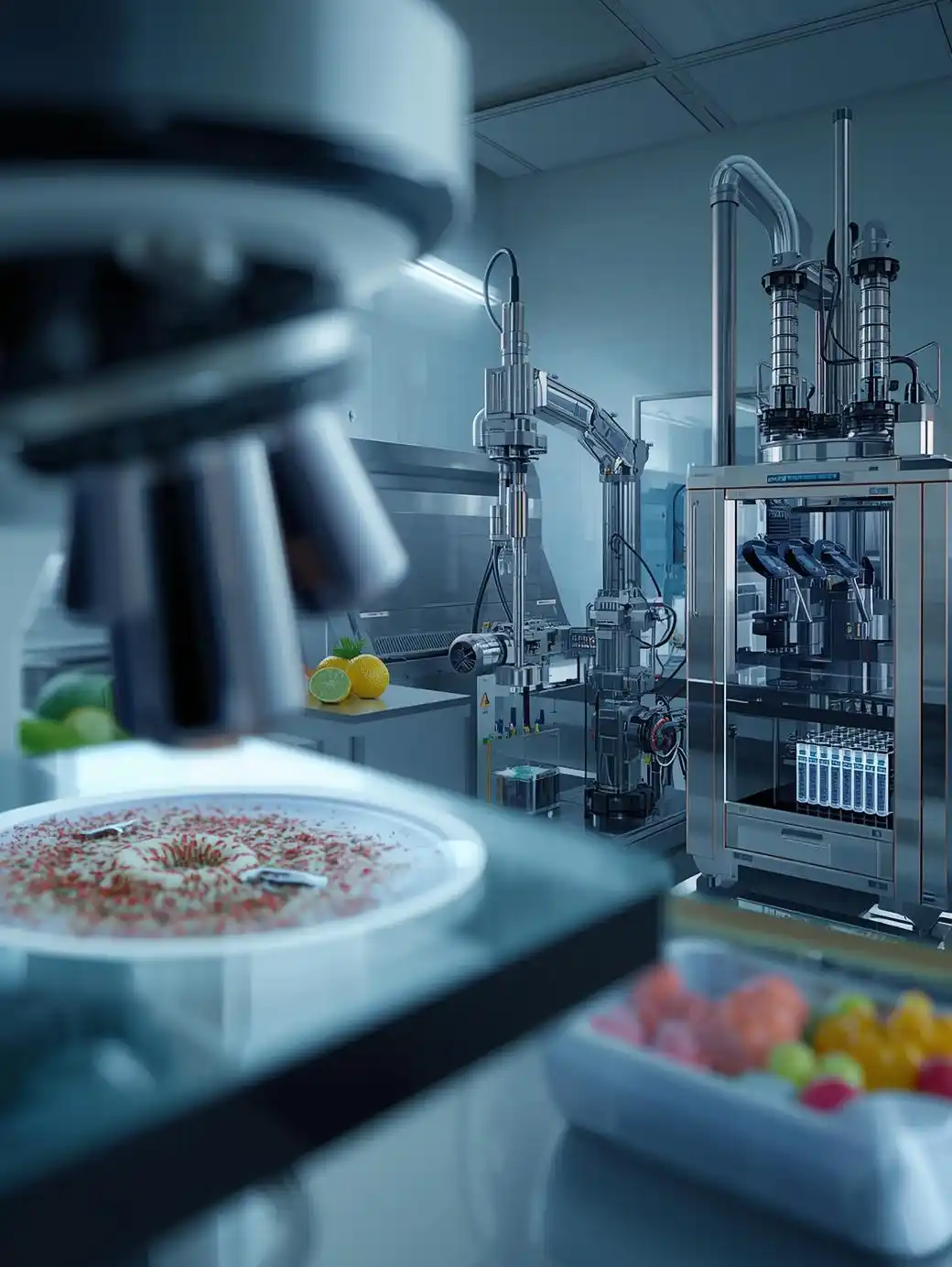
-
ICP-MS Technology (Agilent 7900)
Our Inductively Coupled Plasma Mass Spectrometer is the gold standard for trace metal analysis. It allows us to detect heavy metals in food at parts-per-trillion (ppt) levels, far exceeding the sensitivity of standard atomic absorption.
Low Detection Limits • Rapid Throughput • Broad Dynamic Range
-
LC-MS/MS & GC-MS/MS (Triple Quadrupole)
We employ tandem mass spectrometry coupled with both Liquid and Gas Chromatography. This dual approach ensures comprehensive coverage of pesticide residues across polar and volatile compound groups.
Multi-Residue Screen • Matrix Filtration • High Selectivity
-
Methodology & Validation
All methods for chemical contaminant testing are validated against AOAC and FDA PAM guidelines. We utilize QuEChERS extraction protocols to maximize analyte recovery while minimizing waste for complex food matrices.
Partner with AGT Labs
From field to fork, we ensure your products are free from harmful chemical food contaminants.
ISO 17025 Accredited
Our scope includes accredited chemical contaminant testing, residue analysis, and heavy metals screening.
Regulatory Expertise
Guidance on FDA action levels and EPA tolerances for pesticides in food.
Formulation Support
Identifying contamination sources in raw materials to clean up your supply chain.
Common Questions About Contaminant Testing
What heavy metals should be tested in food?
How do you test for pesticide residues in food?
What are the FDA limits for heavy metals in food?
Why is arsenic speciation analysis important?
Do you test for glyphosate (Roundup) residues?
What is California Proposition 65 (Prop 65) compliance?
Ready to Ensure Your Product Safety?
Join hundreds of food manufacturers who trust AGT Labs for accurate, accredited, and timely chemical analysis.
Contact us